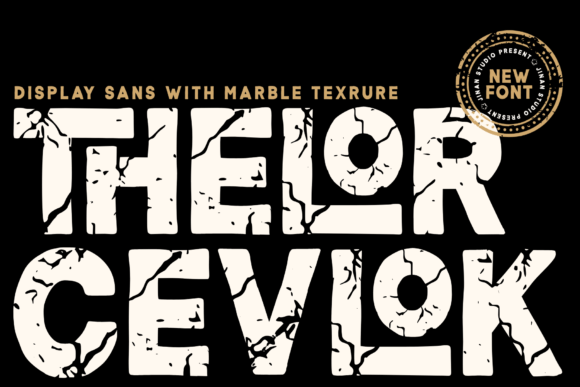
Thelor Cevlok Font: Rugged Elegance for Makers
I was staring at a blank candle label template late one Tuesday night, trying to find the right voice for a new line of small-batch soy candles. The scent profile was complex—cedarwood, smoked vanilla, and a hint of sea salt—and every standard sans serif font I tried felt too clean, too digital, and frankly, too boring for something meant to evoke warmth and texture. That is when I loaded Thelor Cevlok into my design software. Seeing those bold, marble-textured letters appear on the screen changed the entire trajectory of the packaging. It wasn't just text anymore; it was a tactile experience that promised the customer exactly what they would feel when they lit the wick. For makers and handmade sellers, finding a display font that bridges the gap between rugged durability and refined elegance is rare, but this typeface delivers that specific creative spark.
Bringing Texture to Physical Products
As product creators, we know that our customers touch our work before they fully experience it. Whether it is the grain of a wooden sign or the matte finish of a sticker, texture communicates quality. Thelor Cevlok stands out in the crowded market of display fonts because of its distinctive marble texture embedded directly into the letterforms. This isn't a flat vector; it has depth, noise, and character that mimics natural stone. When I applied this font to my candle labels, the visual weight grounded the design. It made the product feel artisanal and established, rather than mass-produced.
This inherent texture makes the font exceptionally useful for physical merchandise where you want to convey a sense of permanence. I have since used it for ceramic mug designs and canvas tote bags, where the rugged aesthetic complements the material of the product itself. On a smooth glass jar, the rough typography creates a beautiful contrast that catches the eye on a shelf or in a listing photo. For those of us selling at craft fairs or through online boutiques, this kind of visual interest can be the difference between a scroll-past and a click. The font does the heavy lifting of establishing a mood, allowing the rest of the label design to remain simple and uncluttered.
Elevating Stationery and Paper Goods
Paper products require a different approach than hard goods, but Thelor Cevlok adapts surprisingly well to stationery when used intentionally. While designing a set of wedding welcome boards and matching place cards, I needed a header font that felt modern yet organic. Traditional scripts can sometimes feel too frilly for contemporary couples, while standard block letters can lack romance. This bold sans serif provided the perfect middle ground. The marble effect added a layer of sophistication that looked stunning when printed on textured cardstock or cotton paper.
For printable wall art creators, this typeface offers a unique selling point. Digital downloads often struggle to convey value because they are intangible. By utilizing a font with built-in texture, your printable art gains an immediate sense of substance even when viewed as a thumbnail on Etsy or Creative Market. I have found that using Thelor Cevlok for short, impactful quotes or single-word affirmations creates artwork that looks professionally typeset rather than like a basic computer document. Just remember that because the texture is detailed, it shines brightest at larger sizes. Reserve this font for titles, names, and focal points, keeping body text in a cleaner, simpler companion typeface to maintain readability.
Practical Considerations for Cutting Machines and Print
If you are a Cricut or Silhouette user, you might be wondering how a textured font performs when cut from vinyl or cardstock. This is a crucial consideration for sticker makers and apparel designers. Because Thelor Cevlok features internal texture, cutting it out of solid-color vinyl will result in a silhouette shape without the marble detail inside. However, this actually works to your advantage for certain applications. The bold, unique outline of the letters holds up beautifully as a standalone shape for window decals or shirt transfers. If you want to retain the marble texture on physical products, consider using print-then-cut methods, sublimation, or UV DTF transfers instead of traditional adhesive vinyl.
When preparing files for professional printing or home inkjet printers, always check your resolution. The intricate details of the marble effect require high-quality source files to avoid pixelation. Before sending your candle labels or invitation suites to print, do a test run at actual size. What looks crisp on a 27-inch monitor might lose definition when shrunk down to a two-inch tag. I always recommend printing a single prototype label or card to verify that the texture reads clearly at your intended scale. This hands-on testing phase saves money on wasted materials and ensures your final product maintains that premium feel.
Strategic Font Pairing for Brand Consistency
A display font as expressive as Thelor Cevlok needs room to breathe. In my own shop branding, I treat this typeface as the "hero" element. It appears on my logo, seasonal sale banners, and primary product headers. To balance its strong personality, I pair it with a minimalist geometric sans serif for ingredient lists, pricing, and website navigation. This combination ensures that the brand feels cohesive and legible across all touchpoints. You might also try pairing it with a delicate handwritten font for secondary accents, which softens the ruggedness and adds a personal, human touch to packaging and thank-you cards.
Consistency builds recognition. When customers see that distinct marble texture, they should immediately associate it with your shop's aesthetic. Use Thelor Cevlok strategically across your social media graphics, listing images, and packaging inserts to create a unified visual identity. However, avoid overusing it. Because it is so visually active, using it for long paragraphs or dense information blocks will overwhelm the viewer and reduce comprehension. Let it sing in short phrases, product names, and decorative headings, and let your supporting fonts handle the functional communication.
Licensing and Commercial Use for Sellers
Before incorporating any new asset into your business workflow, verifying the licensing terms is non-negotiable. As sellers of physical goods, digital templates, and printables, we must ensure we have the appropriate commercial license for our specific use case. Always review the documentation included with Thelor Cevlok to confirm whether your intended application falls under standard commercial use or requires an extended license. This is especially important if you plan to use the font in editable templates for end-users or on high-volume merchandise.
Additionally, check the file formats provided. Having access to OTF, TTF, and WOFF files ensures compatibility across design software like Illustrator, Canva, Procreate, and web platforms. Some versions may include alternate characters, ligatures, or multilingual support, which can be invaluable for creating inclusive wedding stationery or international product labeling. Taking the time to understand these technical and legal details protects your business and allows you to focus entirely on the creative joy of bringing your handmade vision to life with confidence and professionalism.